Probate House Clearance Lancashire: The Professional Guide for Executors in 2026
22 June 2026 · 16 min read · Lancashire House Clearance
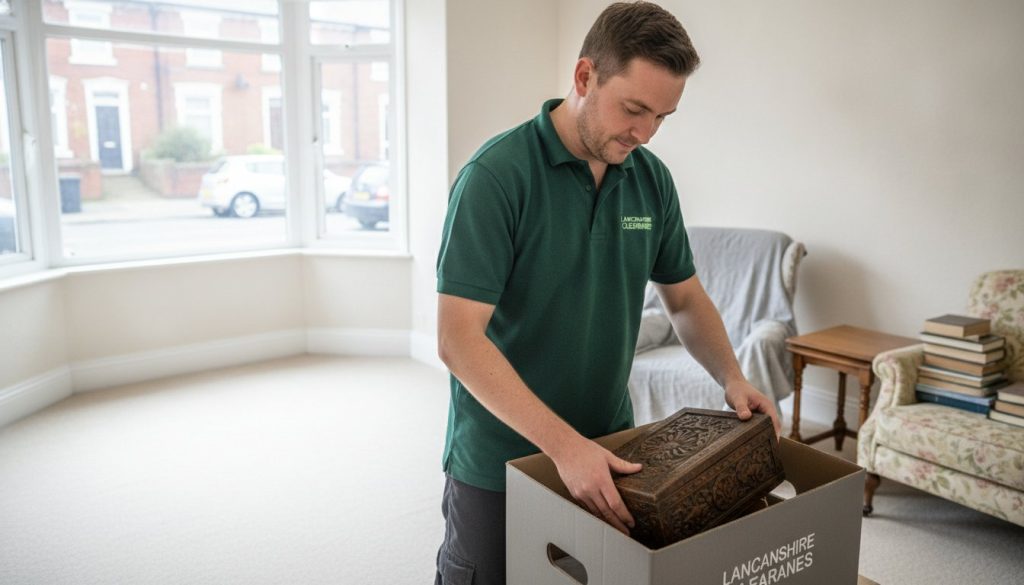
Imagine standing in a hallway filled with a lifetime of memories, tasked with clearing it all while the pressure of HMRC deadlines looms. For many executors, the physical task of a probate house clearance Lancashire feels like an insurmountable hurdle during an already difficult time. You aren’t just moving furniture; you’re managing a legal responsibility and a sensitive personal transition.
It’s understandable to feel a sense of decision fatigue or worry that you might overlook items of value while managing the estate from a distance. You want to ensure the property is ready for sale quickly, but you also need to satisfy inheritance tax requirements with accurate documentation. This guide provides a steady, professional roadmap to help you manage the process with confidence and integrity.
We will explain how to secure written valuations that meet HMRC standards, how to offset your costs by identifying saleable items, and how to achieve a result that respects the environment. By the end of this article, you’ll have a clear plan to transform a cluttered house into a property ready for its next chapter, ensuring every item is handled with the respect it deserves.
Key Takeaways
- Understand the legal distinction between a standard removal and a probate-specific clearance to ensure full compliance with estate laws.
- Learn why a professional probate house clearance Lancashire requires an HMRC-compliant “open market value” assessment rather than a simple removal quote.
- Discover how to reduce the financial burden on the estate by offsetting the value of saleable items against the final clearance costs.
- Follow a structured, step-by-step approach to managing the property, from arranging sensitive site visits to identifying sentimental keepsakes.
- Ensure possessions are handled with integrity through a zero-to-landfill commitment that prioritises ethical recycling and local donations.
Table of Contents
- What is Probate House Clearance and Why is it Different?
- HMRC Requirements: Probate Valuations vs. Clearance Quotes
- Managing Estate Costs: The Value Allowed for Contents Offset
- Step-by-Step Guide for Lancashire Executors and Solicitors
- Choosing an Ethical Partner: The Zero-to-Landfill Commitment
What is Probate House Clearance and Why is it Different?
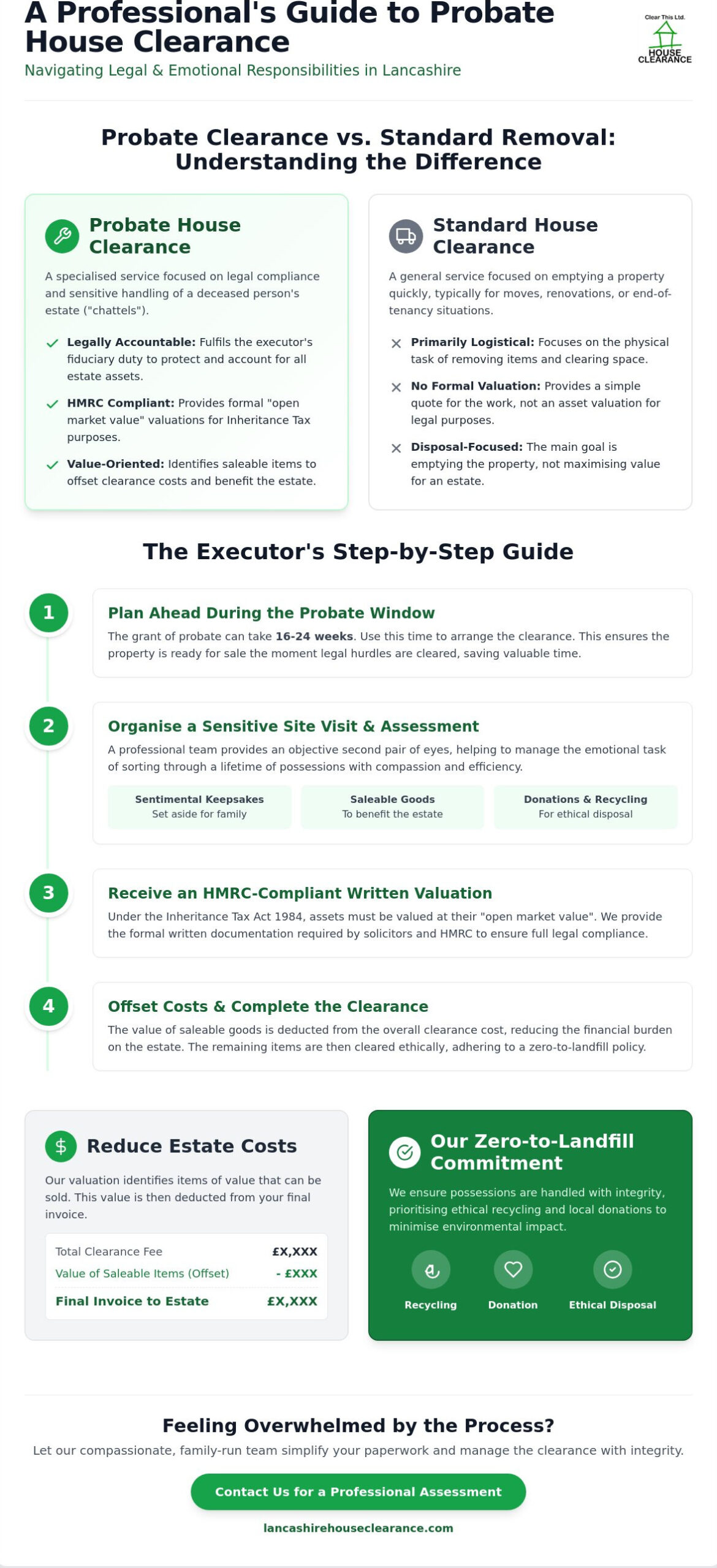
A probate house clearance Lancashire is more than a simple removal service. It’s the professional clearing of a deceased person’s property to prepare it for sale or transfer. Unlike a standard house clearance, which focuses purely on speed and disposal, a probate-led service prioritises legal accountability and valuation. You aren’t just clearing a building; you’re fulfilling a legal mandate to handle “chattels” (personal possessions) according to the legal process of probate.
The distinction lies in the detail. Standard clearances are often about clearing space for a renovation or a move. In contrast, a probate house clearance Lancashire focuses on identifying items of value, providing a written record for the estate’s accounts, and ensuring that nothing of significance is lost in the haste to empty the property. Executors are legally responsible for every item in the house. If a valuable antique is accidentally discarded, it’s the executor who may be held liable.
The emotional weight of this task is often heavy. Clearing a loved one’s home involves navigating decades of memories and personal history. It requires a compassionate, family-run approach that balances efficiency with sensitivity. We understand that grief-related decision fatigue is real, which is why a methodical, supportive process is essential for families across the region.
The Legal of the Executor in Property Clearing
As an executor, you have a fiduciary duty to protect and account for the deceased’s assets. This includes everything from high-value jewellery to everyday household items. A professional inventory provides a paper trail that a DIY approach simply can’t match. This documentation is vital for the bereavement house clearance Lancashire process, as it protects you from potential claims by beneficiaries or queries from HMRC. Professional teams act as an objective second pair of eyes, helping you identify:
- Items that must be kept for sentimental reasons or specific bequests.
- Saleable goods that can be sold to benefit the estate’s final balance.
- Recyclable materials and items suitable for donation to local charities.
When to Start the Clearance Process
The timing of a clearance is a common concern. Whilst you can’t usually complete a property sale before the grant of probate, you can begin the clearance and valuation process much earlier. In fact, starting early is often better. Probate in 2026 is currently taking between 16 and 24 weeks for straightforward applications. This window is the perfect time to organise the clearance, allowing you to present a clean, attractive property to potential buyers the moment legal hurdles are cleared.
We often coordinate directly with Lancashire-based solicitors to manage key collection and property access. This is particularly helpful for executors who live outside the county or are managing “frozen” estates. By handling the logistics professionally, we ensure the property remains secure and the paperwork remains in order throughout the transition.
HMRC Requirements: Probate Valuations vs. Clearance Quotes
One of the most common points of confusion for executors is the difference between a quote for work and a legal valuation. Section 160 of the Inheritance Tax Act 1984 requires all assets in an estate to be valued at their “open market value”. This isn’t the price you originally paid for an item, nor is it the cost to replace it with a new version. It’s the realistic price the item would fetch if sold on the open market at the time of death. Getting this figure right is a core part of a professional probate house clearance Lancashire.
A standard “quote for removal” covers the physical labour, transport, and disposal fees involved in emptying a property. In contrast, a “valuation for probate” is a formal assessment of what the contents are actually worth as assets. Lancashire House Clearance provides the specific documentation needed by estate administrators to satisfy HMRC. By itemising saleable goods correctly, we help you avoid the risk of overpaying Inheritance Tax or, conversely, facing penalties for under-declaring the estate’s value.
If you’re feeling overwhelmed by the inventory process, contact us for a professional assessment to see how we can simplify your paperwork and ensure you meet your legal obligations.
Written vs. Verbal Valuations
A free verbal assessment is often sufficient for smaller estates where the total value of contents is clearly negligible. However, for estates that may approach the Inheritance Tax threshold, a formal written report is essential. This document provides a robust paper trail that protects the executor if HMRC decides to query the figures. A professional report should group low-value household items into general categories whilst providing individual descriptions for any single item worth more than £500. Relying on guesswork can lead to significant delays in the probate application process.
Identifying Hidden Value Amongst Household Items
It’s easy to overlook items that hold surprising value in today’s collector markets. Mid-century furniture, vintage toys from the 1970s and 80s, and even specific types of industrial lighting are currently in high demand. Our team has the expertise to spot these pieces amongst the everyday clutter. Instead of these items being lost to a landfill, we identify goods that are suitable for auction or specialised sale. This approach not only recovers value for the estate but also aligns with workplace recycling regulations by ensuring quality goods are reused rather than discarded. For a more detailed look at what to watch out for, see our guide on valuing items for house clearance.
Managing Estate Costs: The Value Allowed for Contents Offset
Managing the finances of an estate is a significant responsibility, and the costs associated with property maintenance can quickly add up. Our “Value Allowed for Contents” service is designed to help you meet your legal obligations whilst reducing the total invoice for a probate house clearance Lancashire. This approach ensures that the estate doesn’t pay for the removal of items that still hold significant market value. Instead, we identify these assets and use their worth to subsidise the labour and transport costs of the clearance.
During our initial assessment, we look for items that go beyond sentimental value. This might include quality furniture, collectables, or functional household appliances. By identifying these saleable goods early, we provide a more transparent financial picture for the beneficiaries. This process aligns with official HMRC guidance on valuing an estate, which requires executors to account for all personal possessions. Choosing a partner who understands how to offset these values ensures you’re fulfilling your duty to maximise the estate’s final balance.
The Auction Consignment Process
We believe that transparency is the foundation of trust, which is why we favour an auction consignment model over a simple “cash for junk” offer. When we identify items of value, we can arrange for their transport to reputable local Lancashire auction houses. This method is far more ethical than a flat buy-out, as it ensures the estate receives a fair return based on current market demand. Once the items are sold, the final sale price is clearly documented and deducted from your clearance service fee. You’ll receive a detailed report of what was sold and for how much, providing the clear records required by estate administrators and solicitors.
Balancing Labour Costs and Item Values
It’s vital to have a realistic understanding of how clearance costs are calculated. Whilst some companies might promise a “free clearance,” the reality of modern waste management makes this rare. A professional service involves significant labour, fuel, and commercial recycling fees. We calculate the net cost of a probate house clearance Lancashire by weighing these operational expenses against the value of the items we’ve identified for offset. In towns like Preston or Blackpool, where property types vary wildly, this balanced approach ensures you only pay for the work actually required. For more context on how these figures are reached, you can view our guide on the house clearance cost Wigan, which explains the relationship between pricing and offsets in greater detail.
Step-by-Step Guide for Lancashire Executors and Solicitors
Organising a probate house clearance Lancashire doesn’t have to be a source of stress. The process begins with an initial consultation where we arrange a sensitive site visit. If you’re unable to attend, we can collect keys directly from your solicitor’s office. This first meeting allows us to assess the volume of items and identify pieces that may qualify for an auction offset. We prioritise your peace of mind by providing a clear, fixed-fee quote and a professional probate valuation that meets HMRC standards.
Once you’ve approved the plan, we move into the assessment phase. We work with you to separate sentimental keepsakes from saleable items and general waste. On the day of the clearance, our team arrives on-site in Lancashire to handle the heavy lifting. We work methodically, ensuring the property is cleared efficiently whilst respecting the home’s history. You don’t need to be present; we’ll keep you updated throughout the day.
After the work is complete, we provide the essential documentation for your estate accounts. This includes waste transfer notes, which prove that all non-saleable items were disposed of legally and ethically. You’ll also receive a final invoice that clearly shows any offsets from sold items. If you’re ready to begin this process, book a professional site assessment today to get a transparent quote for your estate.
Working with Local Solicitors in Chorley and Preston
We maintain strong relationships with legal firms across the region. We understand the specific requirements of RICS-standard estate management and provide the detailed paperwork solicitors need to progress the probate application. Our team is experienced in bereavement clearance Chorley, where we often act as the boots on the ground for busy legal departments. By handling the logistics of property access and inventory, we allow legal professionals to focus on the technicalities of the estate.
Managing a Property Clearance Remotely
Many executors live outside of Lancashire, making the prospect of managing a house clearance feel daunting. We specialise in remote support, providing regular photo updates and secure key handling throughout the project. Trust is paramount when you aren’t on-site. We ensure the property is left in a “broom clean” condition, ready for immediate inspection by surveyors or estate agents. This level of service removes the need for multiple trips to the property, saving you time and travel expenses during a difficult period.
Choosing an Ethical Partner: The Zero-to-Landfill Commitment
The environmental impact of a house clearance is a growing concern for modern Lancashire families. When you’re managing a probate house clearance Lancashire, you aren’t just clearing a building; you’re deciding the final destination for a lifetime of possessions. We operate with a strict zero-to-landfill policy, which means we prioritise reuse and recycling over disposal. This commitment is particularly relevant given that Lancashire County Council ceased using the Whinney Hill landfill site in April 2026, shifting focus towards energy-from-waste facilities and higher recycling rates across the region.
Non-saleable items aren’t simply thrown away. We manage a careful sorting process where textiles, metals, and plastics are sent to specialised recycling centres. This methodical approach ensures that materials are recovered and returned to the circular economy. For executors, this provides peace of mind that the estate’s contents are being handled with the highest ethical standards. It also protects you from the significant risks associated with unlicensed waste carriers who may not follow these strict protocols.
Using an unlicensed “man-with-a-van” service might seem cheaper, but it carries heavy legal risks. Under UK waste duty of care regulations, the person who produces the waste (the executor) is responsible for ensuring it’s disposed of correctly. If a fly-tipper dumps items from your probate property, you could face prosecution and substantial fines. We provide full waste transfer notes for every project, giving you the legal evidence needed for the estate’s records and your own protection.
Supporting Lancashire Charities Through Donation
Items that aren’t suitable for auction but remain in good condition can find a second life through local charities. We identify usable furniture, clothing, and household goods that can benefit charitable organisations across the county. This process reduces the weight-based disposal costs for the estate whilst supporting the local community. It’s a way of ensuring that the items your loved one valued can continue to be of use to others. You can read more about this in our zero to landfill house clearance guide.
Why a Female-Led, Family-Run Business Matters
Choosing a female-led, family-run team brings a level of empathy and detail-oriented care that is often missing from larger industrial providers. We understand that we are entering your home during a deeply personal transition. With over 30 years of industry experience, we combine traditional values of reliability with modern ethical standards. Our commitment to the Lancashire community, from Wigan to Fleetwood, is built on a foundation of personal integrity and professional accountability. We treat every property with respect, ensuring a calm and grounded environment from the first box packed to the final sweep of the floor.
Preparing the Property for its Next Chapter
Navigating the complexities of an estate requires a balance of legal precision and practical action. By securing an HMRC-compliant valuation and identifying saleable items for auction, you protect the estate’s value whilst fulfilling your fiduciary duties. A professional probate house clearance Lancashire ensures that every item is handled with transparency and respect, from sentimental keepsakes to recyclable materials.
Beyond the physical clearance, preparing the property for the market involves meeting specific legal and safety standards. To help you stay ahead of these requirements, you can learn more about AG Property Services and their roadmap for property compliance.
Lancashire House Clearance brings over 30 years of industry experience to every project. As a female-led, family-run business and a licensed waste carrier with the Environment Agency, we prioritise ethical responsibility through our strict zero-to-landfill policy. We are here to lift the physical and logistical burden from your shoulders, allowing you to focus on the personal side of your bereavement.
Request a Compassionate Probate Clearance Quote from Lancashire House Clearance
You don’t have to manage this transition alone. With the right support, you can clear the path forward with confidence and peace of mind.
Frequently Asked Questions
What is the difference between a probate valuation and a market valuation?
A probate valuation determines the “open market value” of assets at the exact date of death, as required by Section 160 of the Inheritance Tax Act 1984. This is a legal figure used specifically for HMRC and inheritance tax calculations. A market valuation is the price an estate agent expects to achieve in the current property market, which may fluctuate based on local demand and timing.
Do I need to be present at the property during the probate clearance?
You don’t need to be on-site whilst we work. We frequently coordinate with solicitors or neighbours to arrange key collection and property access. This is particularly helpful for executors who live outside the county. We provide regular updates and photographic evidence once the work is complete to ensure you’re kept informed throughout the process.
How long does a typical probate house clearance take in Lancashire?
Most standard properties are cleared within one to two days. However, a probate house clearance Lancashire may require additional time if there’s a high volume of items to sort or if the estate requires a detailed inventory for legal purposes. We provide a clear timeline during our initial assessment so you can plan the next steps for the property with confidence.
Can the cost of the clearance be deducted from the Inheritance Tax bill?
The costs associated with clearing a property and obtaining professional valuations are generally considered a liability of the estate. These administration expenses can usually be deducted from the gross value of the estate before the final Inheritance Tax bill is calculated. You should always keep your final invoice and waste transfer notes as evidence for your estate accounts.
What happens if you find personal documents or hidden cash during the clearance?
We set aside any sensitive documents, photographs, or valuables immediately. Our team is trained to check common “hiding spots” for life insurance policies, share certificates, and cash. These items are securely stored and returned to the executor or the acting solicitor. Maintaining the integrity of the deceased’s personal effects is our highest priority.
Are you licensed to carry waste and do you provide Waste Transfer Notes?
We are fully licensed waste carriers registered with the Environment Agency. For every probate house clearance Lancashire, we provide official Waste Transfer Notes. This documentation is your legal proof that all non-saleable items were disposed of at authorised facilities. It protects the executor from potential liability and ensures full compliance with UK waste duty of care regulations.
Can you clear a property before probate is granted?
It’s common to begin the clearance process whilst waiting for the grant of probate to be issued. Clearing the property early helps to prevent decay, reduces insurance risks, and ensures the house is ready for sale the moment the legal paperwork is finalised. However, you must ensure you have the legal right to access the property before instructing a clearance team.
Which areas of Lancashire do you cover for probate services?
We provide comprehensive clearance and valuation services across the entire county. Our team regularly works in Preston, Blackpool, Chorley, and Wigan, as well as coastal towns like Fleetwood and Lytham St Annes. Being a local, family-run business means we have deep roots in these communities and a thorough understanding of the regional property market.
Ready for a free, no-obligation quote?
Call or message us today — tell us the postcode and what needs clearing, and we’ll do the rest.