Fridge Removal Lancashire: The 2026 Checklist for Responsible Disposal
21 June 2026 · 17 min read · Lancashire House Clearance
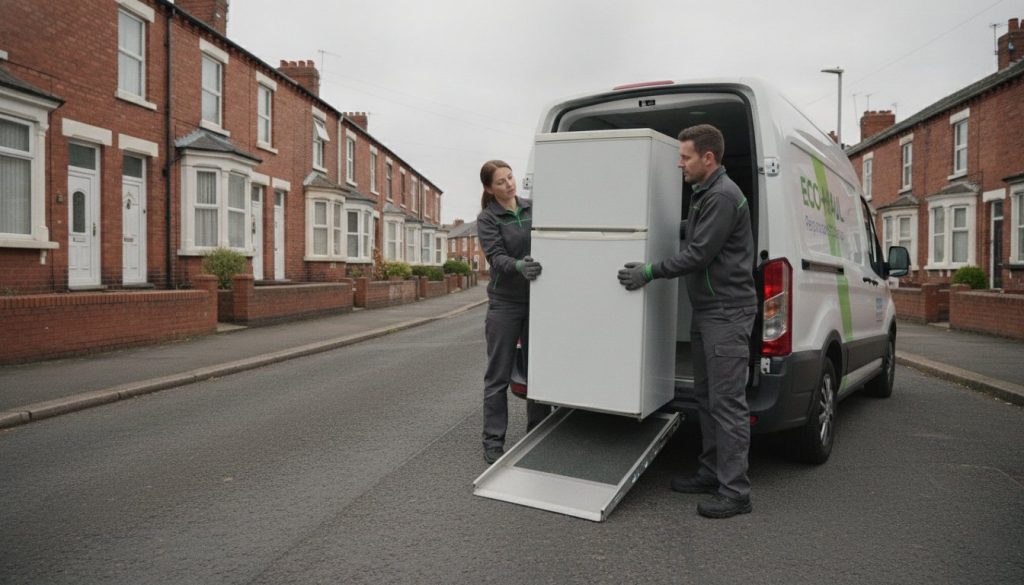
What if the person you paid to take away your old appliance actually ends up costing you a heavy fly-tipping fine? It is a genuine worry for many residents, especially since fridge removal Lancashire services must now comply with the strict 2026 Simpler Recycling standards. You likely feel the pressure of wanting that bulky unit gone, but the physical risk of moving it to the kerb and the fear of rogue traders can make the process feel like a minefield.
We agree that getting rid of a fridge shouldn’t be this complicated or physically demanding. This guide provides a clear, step-by-step checklist to help you manage your disposal legally, safely, and with a clear conscience. You’ll learn about the latest hazardous waste requirements for ozone-depleting substances, how to compare local council fees across the county, and how to ensure your waste carrier is fully licensed. We will walk you through the practical steps of responsible disposal while ensuring your old unit is handled by experts who value environmental integrity as much as you do.
Key Takeaways
- Learn why refrigeration units are classified as hazardous waste and why they require specialist handling to manage harmful gases safely.
- Discover the legal requirements for fridge removal Lancashire residents must follow to avoid fines and ensure environmental compliance in 2026.
- Compare the pros and cons of local council collections against professional bulky item clearance services to find the best fit for your home.
- Access a practical 7-step checklist to prepare your appliance for collection, including essential safety tips like defrosting and securing doors.
- Understand the importance of choosing an ethical, family-run specialist with the experience to handle your disposal with care and transparency.
Table of Contents
- The Challenges of Fridge Removal in Lancashire: Why It Isn’t Simple Rubbish
- Understanding Fridge Recycling: Gases, Metals, and Environmental Safety
- Comparing Your Options: Council Collections vs. Professional Removal Teams
- Your Fridge Disposal Checklist: 7 Steps to a Smooth Collection
- Ethical Fridge Removal with Lancashire House Clearance: Supporting Lancashire Homes
The Challenges of Fridge Removal in Lancashire: Why It Isn’t Simple Rubbish
Disposing of a refrigeration unit is rarely a straightforward task. It requires more than just a strong pair of hands; it demands an understanding of environmental law and personal safety. When you require fridge removal Lancashire, it is important to recognise that these units are classified as hazardous waste. This is because they contain complex refrigerator components and materials, including refrigerants and insulation foams that can release ozone-depleting substances if damaged. These materials stay in the environment for decades if they aren’t processed correctly.
Because of these hazardous elements, you cannot simply toss a fridge into a standard skip or leave it with your general household waste. Skips are designed for inert materials like wood, metal, and rubble. Mixing a fridge with these items can lead to the entire skip being rejected at the processing plant, resulting in extra costs for you. For residents in tightly packed terraced housing in towns like Blackburn or Burnley, the physical challenge is even greater. Narrow hallways and steep stairs make moving a heavy appliance incredibly risky without professional equipment and training.
The Legal Framework: WEEE Regulations and Duty of Care
The Waste Electrical and Electronic Equipment (WEEE) directive ensures that all electrical goods are recycled in a way that protects the planet. As a householder, you have a legal “Duty of Care” to ensure your waste is handled by a licensed professional. Relying on an unlicensed “man and van” service might seem like a quick fix, but it carries significant risks. If that collector fly-tips your appliance on a Lancashire country lane, you are the one who could face a heavy fine or prosecution. Always ask to see a waste carrier licence before any fridge removal Lancashire service begins. It is the only way to guarantee your old unit won’t end up in a ditch.
Why Councils Require Kerbside Collection
Most local authorities in Lancashire offer a bulky waste service, but they almost always operate under strict “outside only” rules. Due to insurance and liability restrictions, council teams are generally not permitted to enter your home. This creates a significant barrier for the elderly or those managing a bereavement house clearance in Lancashire, where clearing a property of large appliances is often too much for one person to handle alone.
Wait times for local authority collections often stretch to 10 days or more. When you are trying to settle an estate or move home, this delay can be impractical. Professional bulky item clearance offers a more responsive alternative, providing the “in-home” support that council services lack. We understand that during sensitive times, you need a service that is both efficient and compassionate, removing the physical burden from your shoulders completely.
Understanding Fridge Recycling: Gases, Metals, and Environmental Safety
Most people see an old appliance as a bulky headache. In reality, it is a complex assembly of chemicals and metals that requires scientific handling. Proper fridge removal Lancashire ensures these materials don’t poison our local environment. Older refrigeration units are often charged with Chlorofluorocarbons (CFCs) or Hydrofluorocarbons (HFCs). These gases are thousands of times more potent than carbon dioxide. When released into the atmosphere through improper disposal, they contribute significantly to global warming and ozone depletion.
The process of de-gassing is the most critical stage of recycling. It involves extracting the refrigerant under vacuum to prevent any leakage. Once the gases are safely captured, the unit becomes a valuable source of raw materials. A typical fridge yields several high-value components:
- Steel: The outer casing is shredded and smelted for new construction materials.
- Copper and Aluminium: Found in the compressor and cooling pipes, these metals are infinitely recyclable.
- Plastics: High-grade polymers are separated and sent for pelletisation to make new products.
We operate with a “Zero-to-Landfill” philosophy. This means every possible gram of material is diverted back into the circular economy. If you are unsure how to handle your old unit, our team provides professional bulky item clearance to ensure these high standards are met. It’s about doing the right thing for the county we all share.
The Problem with POPs (Persistent Organic Pollutants)
Modern recycling also has to account for Persistent Organic Pollutants, or POPs. These are chemicals often found in the fire-retardant foam insulation and plastic trays of older models. They are called “persistent” because they don’t break down naturally in the environment. Because of this, they cannot be buried in landfill sites where they might leach into the soil. Instead, they must undergo high-temperature incineration to break their chemical bonds safely. In 2026, the presence of POPs dictates that specific components must be diverted to specialist thermal treatment plants rather than standard recycling streams.
The Lifecycle of a Recycled Fridge
When we collect a unit, it follows a strict path. First, it’s transported to a dedicated WEEE processing centre in the North West. Here, the compressor is removed and the oils and gases are drained. The remaining shell is then fed into a nitrogen-purged shredder. This prevents any residual gases trapped in the foam from escaping or igniting during the process. Finally, automated magnets and eddy-current separators sort the metals from the plastics. You can read more about this ethical approach in our guide on zero to landfill house clearance. Proper fridge removal Lancashire isn’t just about clearing space; it’s about protecting our future.
Comparing Your Options: Council Collections vs. Professional Removal Teams
Choosing between the local council and a private specialist usually comes down to two factors: your budget and your back. Most residents looking for fridge removal Lancashire start by checking their local borough council. While local authority collections are often the most cost-effective option for a single, standalone item, they come with significant physical and logistical restrictions. The most notable hurdle is the “kerbside only” rule. Council teams are generally not permitted to enter your property, meaning you must move the appliance to the edge of your boundary yourself.
For many, moving a 70kg refrigerator through a narrow kitchen door and across a garden is simply not an option without risking personal injury or damage to the property. Speed is another consideration. Council wait times across Lancashire often stretch to 10 working days. If you are in the middle of a property sale or a kitchen renovation, a professional team can usually provide a resolution within 24 to 48 hours. We also offer a “Value Allowed for Contents” model. If you are disposing of a high-end, working appliance alongside other household goods, its resale or auction value can often be used to offset the overall cost of your clearance.
When to Use the Council Special Collection
The council service is an excellent choice if you are physically able to move the unit and your timeline is flexible. It’s best suited for single-item disposals where urgency isn’t a priority. You should be aware that if you are booking a collection for multiple items, such as a fridge and a mattress, councils often require you to cover soft furnishings with plastic to prevent them from becoming waterlogged in the rain. For a detailed breakdown of local rates and rules, see our council bulky waste collection guide.
The Benefits of a Professional Property Clearance Team
A professional team provides a “full room” service. We enter the property, navigate the stairs, and handle all the heavy lifting on your behalf. This is particularly vital for those managing a deceased estate or a sensitive life transition where the physical burden of clearing a home is the last thing you need. Our approach to fridge removal Lancashire is built on 30 years of experience, ensuring a calm and methodical process from start to finish.
Beyond just lifting, we can assist with basic disconnection and ensure the unit is secured for transit. This comprehensive appliance removal in Lancashire ensures that your home remains undamaged and your legal “Duty of Care” is fully met. We take the time to handle each item with the respect it deserves, ensuring that nothing is destined for landfill if it can be recycled or repurposed.
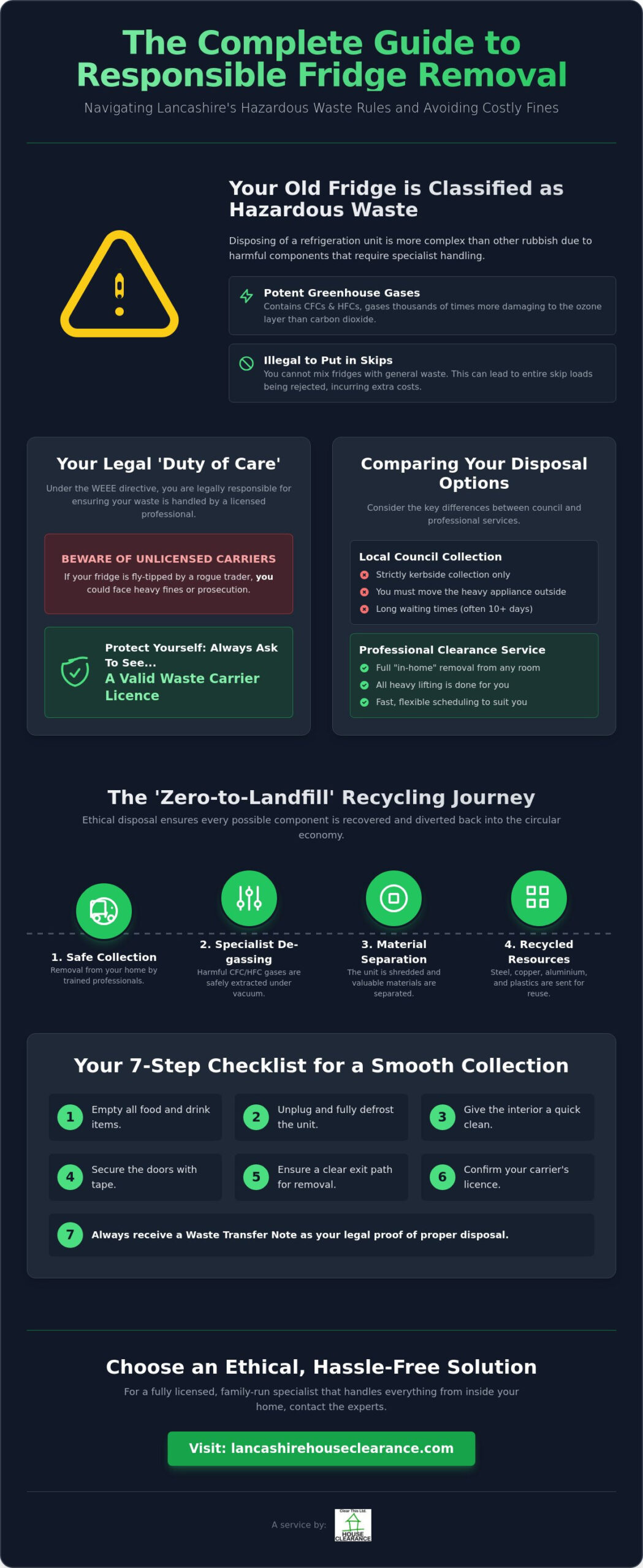
Your Fridge Disposal Checklist: 7 Steps to a Smooth Collection
Preparing for fridge removal Lancashire involves more than just booking a date. A little preparation ensures the safety of the removal team and protects your home from accidental damage. If you’ve chosen a professional service to handle the heavy lifting from inside your kitchen, following these seven steps will make the process seamless. It’s about ensuring that when the team arrives, they can focus on a safe, efficient exit without any unexpected hitches.
- Empty and Defrost: Clear all food and ensure the unit is fully defrosted at least 24 hours before collection. This prevents smelly water from leaking onto your carpets or inside the removal vehicle.
- Secure the Doors: Use strong masking or packing tape to keep the doors shut. This prevents them from swinging open during transit, which can cause injury or damage to your door frames.
- Clear the Access Route: Remove any obstacles like shoes, rugs, or small furniture from hallways and doorways. The team needs a clear, wide path to navigate the appliance safely.
- Fix the Power Cord: Coil the power cable and tape it securely to the back of the fridge. A trailing plug is a significant trip hazard when moving heavy loads through narrow spaces.
- Protect Your Flooring: Lay down heavy cardboard or old rugs along the exit route. Heavy appliances can easily mark wooden floors or tear vinyl if they aren’t handled with specific floor-protection measures.
- Verify the Waste License: Ask to see a valid Environment Agency Waste Carrier License upon arrival. This is your legal protection against fly-tipping and ensures the unit is handled responsibly.
- Get Your Paperwork: Ensure you receive a waste transfer note. This document is your proof that you’ve fulfilled your legal “Duty of Care” as a householder.
Safety and Preparation for Internal Collection
When our team enters your home, our priority is maintaining the integrity of your property. Ensure the appliance is completely disconnected from the mains; we cannot perform electrical work or plumbing disconnections for integrated units. If your fridge is a modern, high-spec model in good working order, it may be eligible for an auction offset. We can assess this during the booking process to see if the value of the unit can reduce your overall bulky item clearance costs. It’s a transparent way to ensure you get the best value while maintaining high ethical standards.
What to Ask Your Waste Carrier
Accountability is the hallmark of a professional service. Ask your carrier about their “Zero-to-Landfill” policy specifically for hazardous white goods. A reputable, family-run Lancashire business will be transparent about which WEEE-regulated facility they use for de-gassing. Choosing a local specialist means you’re supporting a team that’s accountable to the local community and deeply invested in the environmental health of our county. Always insist on a waste transfer note; it’s the only way to guarantee your old appliance won’t end up abandoned in a Lancashire country lane.
Ethical Fridge Removal with Lancashire House Clearance: Supporting Lancashire Homes
Lancashire House Clearance stands apart as a family-run, female-led specialist with over 30 years of heritage in the North West. We understand that fridge removal Lancashire is often part of a much larger, more emotional task. Whether you’re clearing a family home or simply upgrading your kitchen, we provide a service that prioritises trust and ethical responsibility. Our long-term experience means we don’t just see a hazardous appliance; we see a resident who needs a reliable, stress-free solution. We handle the heavy lifting from the exact spot the appliance sits, saving you from the physical strain and potential injury associated with kerbside-only services.
Our commitment to the local environment is unwavering. We ensure every unit is processed through authorised facilities where hazardous gases are safely removed, preventing them from entering our local atmosphere. Unlike cold, industrial providers, we offer a “Value Allowed for Contents” service. If your refrigeration unit or other household items have resale value, we can often offset this against the cost of your clearance through our recycling and auction services. This creates a transparent and fair pricing model that respects the value of your possessions while ensuring they are disposed of or repurposed correctly.
Compassionate Service for Sensitive Transitions
Major life changes, such as a bereavement or a move into residential care, require a delicate touch. We specialise in supporting families during these difficult times, providing a friendly and respectful presence that industrial waste firms often lack. Our team handles every aspect of the clearance, ensuring the property is treated with care. This approach is central to our bulky item collection in Chorley and the wider Lancashire area. We believe in being a neighbourly guide rather than just a contractor, offering a supportive face when it’s needed most.
Booking Your Fridge Collection in Lancashire
Arranging your collection is a straightforward and transparent process. We provide quotes based on the volume of waste and the labour required, ensuring there are no hidden surprises on the day. Our coverage is extensive, reaching homes and businesses across the county. Whether you’re in Preston, Blackpool, Wigan, or Blackburn, our professional team is ready to assist you.
Our methodical approach ensures your legal “Duty of Care” is met, with full documentation provided for every job we undertake. We move efficiently through the practical details while never losing sight of the human connection that defines our business. To get started, you can contact Lancashire House Clearance for a professional fridge removal quote. Let us take the weight off your shoulders with a service that’s as principled as it is practical.
Secure Your Responsible Disposal Today
Managing a fridge removal Lancashire task doesn’t have to be a source of stress or physical risk. We’ve explored why these appliances require specialist handling to manage hazardous gases and how the 2026 regulations protect our local environment. By following the preparation checklist and understanding the legal requirements of the WEEE directive, you can ensure your old unit is recycled with total transparency and care.
Lancashire House Clearance brings 30 years of experience as a female-led, family-run business dedicated to ethical standards. We’re an Environment Agency Licensed Waste Carrier and operate a strict zero-to-landfill policy for all Lancashire clearances. Our team is ready to handle the heavy lifting from inside your property, providing a calm and supportive service that puts your needs first.
Book your professional fridge removal with Lancashire House Clearance today. You can move forward with the peace of mind that your home and the environment are in safe, professional hands.
Frequently Asked Questions
Do I need to defrost my fridge before it is collected?
Yes, you should defrost your appliance for at least 24 hours before your scheduled collection. This prevents smelly water and ice from leaking into the removal vehicle or onto your carpets during transit. Emptying all food and wiping down the interior also helps maintain hygiene standards for the recycling team. It’s a simple step that makes the unit much safer and lighter to handle.
Can I leave my old fridge on the pavement for anyone to take?
No, you shouldn’t leave a fridge on the pavement as this is legally classified as fly-tipping. Fridges are hazardous waste and require professional de-gassing to prevent environmental damage. Leaving them outside also poses a significant safety risk to children and pets, as the doors can become a trap. You remain legally responsible for the unit until it’s collected by a licensed carrier who provides a waste transfer note.
What is the difference between a fridge and a fridge-freezer for disposal?
The primary difference lies in the quantity of hazardous materials and the physical weight of the unit. A fridge-freezer typically contains more insulation foam and a larger volume of refrigerant gases than a standalone larder fridge. While both fall under the same WEEE regulations, the larger units require more effort to de-gas and shred during the final recycling stages. Their size also makes them more complex to navigate through narrow doorways.
Does the council collect fridges from inside the house in Lancashire?
Most Lancashire councils only collect bulky items from the property boundary or the kerbside. They won’t enter your home due to insurance and liability restrictions. If you’re unable to move the appliance yourself, a professional fridge removal Lancashire service is the best option. These specialists are trained to navigate hallways and stairs to collect the unit directly from your kitchen, saving you from any physical strain.
How much does it cost to dispose of a fridge legally in the UK?
Legal disposal costs vary depending on whether you use a local authority service or a private carrier. In 2026, some Lancashire councils offer free collections whilst others charge up to £30 per item. Private services generally have higher fees because they include internal labour and more flexible collection times. Remember that the cheapest option may not include the help you need to move the unit from your kitchen to the street.
What happens if I use an unlicensed waste carrier for fridge removal?
You could face a heavy fine or prosecution if your waste is fly-tipped by an unlicensed collector. Under your legal “Duty of Care,” you’re responsible for ensuring your waste goes to a legitimate processing site. If the person you hire dumps the fridge in a country lane, the authorities can trace the unit back to your address. Always check for a valid Environment Agency waste carrier licence before allowing anyone to take your appliance.
Can I take my old fridge to a local Lancashire recycling centre myself?
Yes, most Household Waste Recycling Centres in Lancashire accept fridges from domestic residents for free. You must transport the unit yourself and ensure it stays upright to prevent refrigerant gases from leaking. It’s always best to check your local council website for any 2026 restrictions on vans or trailers before you set off. Be prepared to show proof of residency, such as a utility bill, when you arrive at the site.
Are American-style fridge-freezers more difficult to remove?
Yes, American-style units are significantly harder to remove due to their extreme weight and width. These appliances often weigh over 100kg and frequently require the doors to be removed just to fit through a standard house frame. Expert fridge removal Lancashire teams use heavy-duty dollies and additional staff to ensure these large units don’t mark your floors or damage your walls. They require a methodical approach to ensure a safe exit from the property.
Ready for a free, no-obligation quote?
Call or message us today — tell us the postcode and what needs clearing, and we’ll do the rest.